
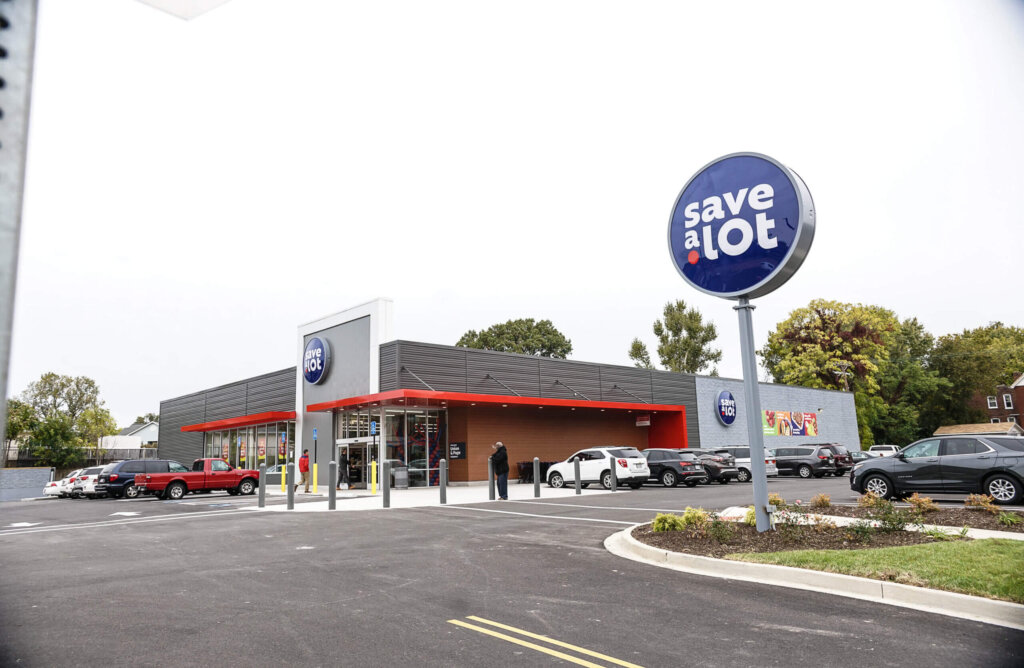
Finding the right real estate site is one of the most important decisions for an independent grocery operator and Save A Lot has support in place to help Retail Partners open in markets that support long-term success. With smaller, highly efficient store formats and clear site criteria, we make real estate selection more predictable, cost-effective and aligned with the needs of value-focused shoppers.
Why Save A Lot Uses a Smaller, More Efficient Footprint
Unlike conventional supermarkets averaging 40,000 to 60,000 square feet, Save A Lot stores typically range from 12,000 to18,000 square feet. This intentional store design benefits Retail Partners in several ways:
- Lower build-out and operating costs – A smaller footprint reduces rent costs, utility expenses, staffing requirements and ongoing maintenance.
- Simplified operations – The store layout is streamlined to support quicker stocking, leaner labor models and a fast in-and-out customer experience.
- Right size for more communities – The smaller footprint allows Save A Lot to fit comfortably into suburban strips, value-oriented shopping centers and rural main streets where larger chains cannot operate efficiently.
This smaller, more efficient model, opens doors for grocery store owners to support communities that are currently underserved, giving them a competitive advantage and the chance to build loyalty with the shoppers who rely on value the most.
Key Site Requirements: What Save A Lot Looks For
Save A Lot uses a focused, data-driven approach to evaluating potential store locations. This helps Retail Partners enter markets that are positioned for long-term success while maintaining the efficiency that defines the Save A Lot model.
A strong Save A Lot site begins with the surrounding market. Ideal trade areas typically include a population of around 35,000 or more, or 10,000+ in rural communities, with a customer base that values affordability and convenience. Many successful markets also have a significant number of families with children, who are an important driver of weekly grocery demand.
The physical store itself also plays a key role in operational performance. The smaller footprint keeps overhead low and customer navigation simple. Sites may be freestanding or in-line as long as they offer strong visibility from major roadways, easy customer access and clear signage.
Locations must have a dedicated receiving area and parking availability of roughly five spaces per 1,000 sq. ft. Co-tenancy with other value-oriented retailers is a plus, as it increases overall traffic and helps anchor the shopping center.
Together, these criteria ensure consistency across locations while maximizing the performance potential for Retail Partners. Strong visibility, efficient store size, reliable distribution access and value-oriented customer bases all contribute to the streamlined shopping experience customers expect and the operational ease that allows Retail Partners to run profitable grocery businesses.
Why the Right Real Estate Matters More in Value-Focused Grocery
Value-focused grocery is built on efficiency, and real estate plays a central role in creating that. The right Save A Lot location allows operators to:
- Keep operating costs low
- Maintain sharp pricing
- Improve accessibility for time- and value-sensitive shoppers
- Optimize labor and inventory
- Build consistency across multiple stores if they scale
When these elements align, Retail Partners see stronger margins, faster customer adoption and improved long-term stability.
Thinking About Becoming a Save A Lot Retail Partner?
A strong location is the foundation of your success and Save A Lot’s real estate support ensures you won’t navigate the process alone.
Connect with our Business Development team to review active markets, available territories and site submission options.


